How to Get to Cabo de Gata: Buses from Almería, Beach Access and Parking
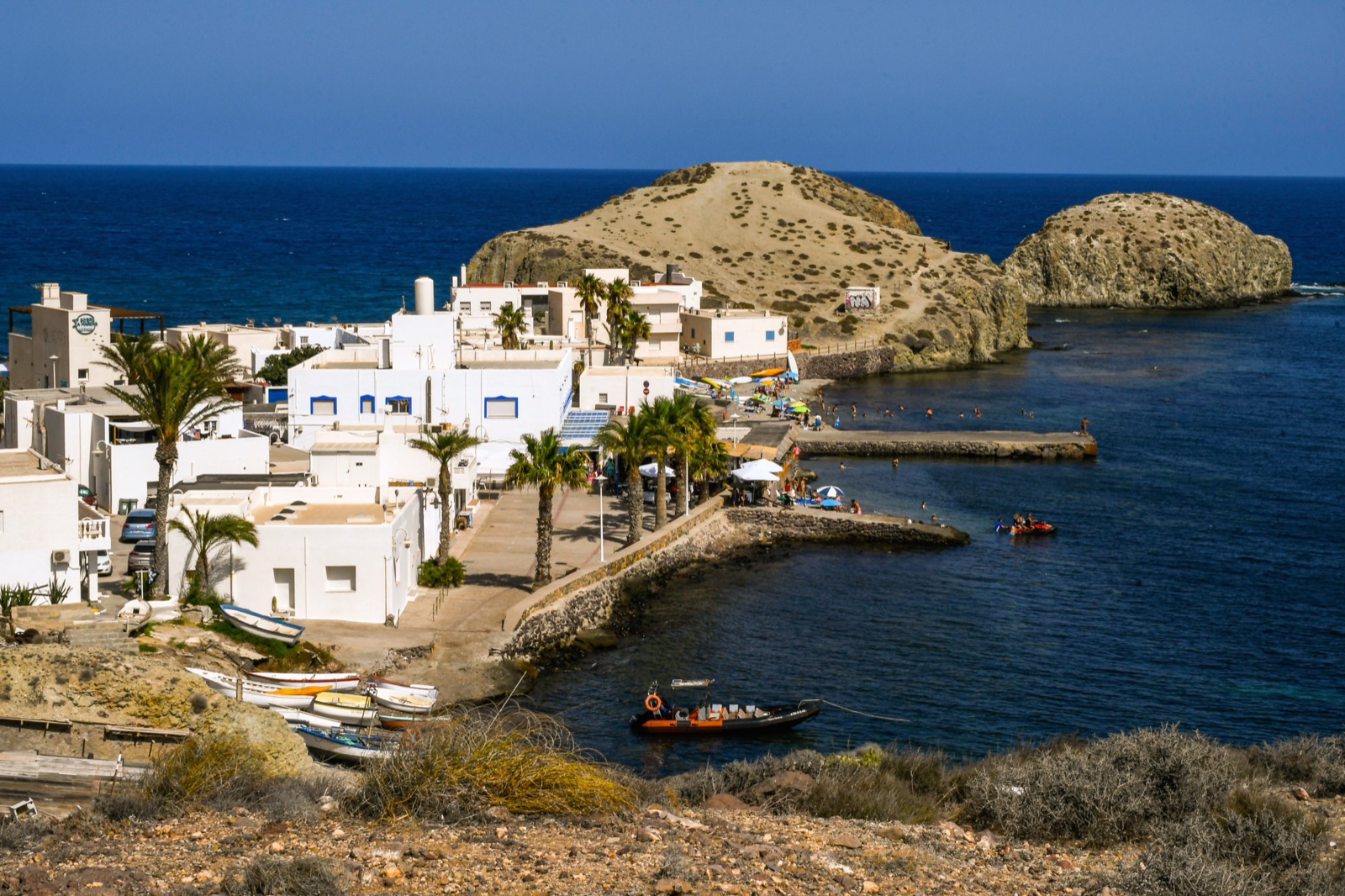
Cabo de Gata-Níjar is the wild corner of Spain’s Mediterranean coast: volcanic hills falling into clear water, empty coves, white villages and salt flats full of flamingos. It is also spread out, lightly served by public transport and protected by rules that change what you can do in summer. A little planning makes the difference between a perfect beach day and an hour spent queuing at a barrier.
This guide explains how the park is laid out, how to get there by car and by bus, how access works to the famous beaches west of San José and to Los Muertos, how to reach the coves you can only walk or sail to, and how to see the park without a car.
The park at a glance
The Cabo de Gata-Níjar Natural Park lies in the far south-east of Andalusia, in the province of Almería.
- Declared a natural park by Decree 314/1987 of 23 December, it was Andalusia’s first maritime-terrestrial natural park.
- The park has 37,500 ha of land and 12,012 ha of sea across the municipalities of Almería, Carboneras and Níjar.
- The park stretches along more than 60 km of Mediterranean coastline, and its 63 km of cliffs form the best-preserved coastline of the Spanish Mediterranean.
- The geopark covers 352 km² of land and 120.12 km² of protected sea, 49,152 ha in all, with three municipalities and 27 settlements.
Those 27 settlements are mostly small villages and hamlets scattered along the coast and inland. There is no single centre, so where you base yourself shapes your trip.
The main bases
- San José is the gateway to the most famous beaches, Genoveses and Mónsul, which lie to its west along an unsurfaced track.
- Cabo de Gata village and the salt flats are on the south-western side, near the lighthouse and the Mermaid Reef.
- Las Negras is the starting point for Cala San Pedro, reached only on foot or by boat.
- Carboneras and Agua Amarga are in the north-east; Los Muertos lies between Agua Amarga and Carboneras, far from any village, and has no services.
Getting there by car
A car is by far the most flexible way to explore the park, because the villages and beaches are spread out and buses are few. The best road access is the E-15 motorway, which connects with the A-92. From Almería, the park’s villages are a short drive east; from the north, the motorway brings you down the coast to the turn-offs for Carboneras, Níjar and San José.
The catch is parking. The park is popular, and the population peaks in summer at about 60,000 and is much lower the rest of the year. In July and August, the car parks at the best-known beaches fill early, and access to some of them is regulated, as explained below.
Getting there by bus
Without a car, the gateway is Almería. Three coach companies link Almería’s intermodal station with the park villages: Autocares Bernardo, Frahermar and Alsa. The intermodal station is where trains and buses meet, so it is easy to arrive by rail and change to a coach.
Almería to San José
San José is the most useful village to reach by bus, because it is the base for Genoveses and Mónsul.
- Buses leave Almería for San José at 10:00, 13:15 and 18:30 Monday to Saturday, and at 10:00 and 18:30 on Sundays and holidays.
- Buses leave San José for Almería at 07:00, 11:00, 15:00 and 20:00 on weekdays, and at 11:00 and 20:00 on Sundays and holidays.
- Autocares Bernardo buses run from Almería’s intermodal station to San José; the fare is €3.10 (€2.06 with the CMT transport card).
With only a handful of departures a day, plan around the timetable: the 10:00 bus out and the 18:30 or 20:00 bus back make a good beach day.
The beaches west of San José: Genoveses and Mónsul
The most famous beaches in the park — Genoveses, Mónsul, and the smaller coves between and beyond them — lie west of San José, reached by an unsurfaced track. To protect them from overcrowding, access is regulated in summer.
How the summer regulation works
- In summer, motor-vehicle access to the beaches west of San José (Genoveses, Mónsul, Media Luna, Cala Carbón and others) is regulated: vehicles pay a single €6 fee, and the barrier closes at set hours or early when the car parks are full.
- Since 2010, a barrier at the start of the track has limited private vehicles each summer once the beach car parks are full.
- The barrier also closes early if the maximum capacity is reached.
- The speed limit on the track is 20 km/h.
- A height barrier keeps caravans and motorhomes out at night, from 20:00 to 08:00; camping is prohibited.
The dates of the regulation are set each year, so check before you go. The €6 fee pays for access control, environmental information, cleaning beaches and tracks, portable toilets and watering the track.
The alternatives to driving
You do not need a car to reach these beaches, and in high summer it is often easier without one.
- The shuttle bus. A shuttle bus from San José drops you at the beach access points. The shuttle stops about 50 metres from Mónsul beach; from the Genoveses stop it is about a 10-minute walk.
- On foot. Genoveses is no more than a kilometre from San José, and the unsurfaced track is easy, even with a pushchair. Mónsul is reached by a 4-kilometre forest track from San José.
- By bike. Walking or cycling to the beaches is free.
Outside summer
Outside the summer regulation, access is free, but you must always park in the designated car parks. Spring and autumn are the easiest times to drive to Mónsul and Genoveses, and the beaches are far quieter.
Bring everything
These are wild beaches. There is nowhere to buy drinks at Mónsul; bring what you need. Carry water, food, sun protection and a bag for your rubbish.
Los Muertos
Los Muertos, in the north-east of the park, is often named among the most beautiful beaches in Spain. It is reached very differently from the San José beaches.
Parking
- Los Muertos beach is always reached on foot by a path; only the nearby car park is regulated.
- In summer the Los Muertos car park charges €6 for cars, €3 for mopeds, €4 for motorbikes and €10 for vans, motorhomes and buses, from 09:00 to 21:00; spaces are limited.
- From early July a shuttle bus runs from Carboneras town to Los Muertos.
The path down
Three paths lead down: one from the information point, about 700 metres with a steep drop; one from the end of the car park, 100 metres shorter but much steeper; and old, uneven stone steps near the viewpoint. The descent is not easy and is not advisable for children, older people or anyone with reduced mobility. Remember that you will have to climb back up in the heat.
By sea
You cannot be dropped at the beach by boat: current rules prohibit landing boat passengers directly on Los Muertos beach. You can, however, see it from the water on a boat trip from Carboneras.
Cala San Pedro
Cala San Pedro is one of the most special coves in the park, and one of the hardest to reach.
- By boat. Boats from Las Negras beach reach Cala San Pedro in 10 to 15 minutes. This is the easiest way.
- On foot. On foot, the path starts from Las Negras; even from the San Pedro car park it is still about 2 km along a narrow path near cliffs.
The salt flats and the lighthouse
The south-western corner of the park is easy to reach by road from Almería or San José and is worth a separate stop.
- The salt flats. The Cabo de Gata salt flats are the only ones still worked industrially in eastern Andalusia, producing about 40,000 tonnes of salt a year. There are two bird-watching hides; bring binoculars, because they are set well back from the birds.
- The lighthouse and the Mermaid Reef. The Cabo de Gata lighthouse was built in 1863 to warn passing ships off the coast. Next to it, a viewpoint looks over the Mermaid Reef, and there is a tourist information point next to the viewpoint.
Seeing the park without a car
If you are staying in Almería without a car, organised trips are the easiest way to see the park.
4x4 tour of the natural park from Almería. A driver and guide take you to a volcano-top view over the beaches, the salt flats and their flamingos, the Mermaid Reef and the fishing village of Cabo de Gata. About 2 hours, departing from Almería.
Boat trip from San José. A guided cruise from San José past untouched coves, old volcanoes and the ruins of watchtowers and castles. About 1h 45m.
Six-coves boat route from Carboneras. Two hours in a small boat (11 passengers at most) past coves, volcanic cliffs and sea caves, with a swim and snorkel stop. There is a refund if the sea is too rough.
Kayak and snorkel tour. Paddle along the volcanic cliffs to coves reached only from the sea, then snorkel. About 3 hours.
Sailing to Los Muertos beach. A family-friendly sailboat from Carboneras to Los Muertos beach and Agua Amarga, with a snorkelling stop. About 3 hours.
The tours page lists them all with live prices.
Sample plans
A summer day by bus from Almería
- 10:00: bus from Almería’s intermodal station to San José.
- Late morning: the shuttle, or a walk of no more than a kilometre, to Genoveses.
- Afternoon: on to Mónsul by shuttle, for its lava rocks and fine sand.
- Evening: the shuttle back to San José and the 18:30 or 20:00 bus to Almería (check which runs that day).
A day by car outside high summer
- Morning: drive to Mónsul and Genoveses; outside the summer regulation you can park in the designated car parks.
- Midday: lunch in San José.
- Afternoon: drive to the salt flats for the flamingos and on to the lighthouse and the Mermaid Reef viewpoint for sunset.
A north-east day
- Morning: Los Muertos early, before the car park fills; allow time for the path down and back up.
- Afternoon: a boat trip from Carboneras, or on to Las Negras and the boat to Cala San Pedro.
Practical tips
- Arrive early in July and August, whether you drive to the San José barrier or the Los Muertos car park.
- Use the shuttle from San José in high summer; it avoids the barrier altogether.
- Carry water and shade. Most of the famous beaches have no services at all.
- Wear proper shoes for the Los Muertos path and the walk to Cala San Pedro.
- Check the wind. Strong east winds make some beaches unpleasant and cancel boat trips.
- Leave no trace. These beaches stay beautiful because visitors take their rubbish home.
With children
Choose your beaches carefully. Genoveses’ gentle, gradual entry into the water suits families, and the walk from San José is short and easy. Los Muertos is the opposite: the descent is not advisable for children, and the shore shelves steeply, so you are soon out of your depth. The shuttle bus, which stops close to Mónsul, saves small legs in the heat.
Choosing when to go
The access rules and the crowds are both seasonal, so timing changes your trip as much as the route does.
- High summer brings the warmest sea and the longest days, but also the regulated access, the full car parks and the busiest beaches. Mean daily maximums run from 16.8 °C in January to 28.8 °C in July and 29.6 °C in August, and nights stay warm: Cabo de Gata has on average 119 tropical nights a year.
- Spring and autumn are the easiest seasons for visiting by car: outside the summer regulation, access is free, the light is softer and walking is far more pleasant. In October the mean maximum is still 24.1 °C.
- Winter is mild and quiet, ideal for walking, birdwatching at the salt flats and the villages, if not for swimming.
Rain is rarely a worry here: ten months of every year are considered arid.
Where to base yourself
Because the park is spread out, pick a base that matches what you most want to see.
- For Genoveses and Mónsul, stay in or near San José: you can walk to Genoveses, use the shuttle to Mónsul, and avoid the barrier entirely.
- For Los Muertos and the north-east, a base near Carboneras or Agua Amarga puts the beach and the boat trips on your doorstep.
- For Cala San Pedro, Las Negras is the starting point for both the boat and the path.
- Without a car, Almería has the most connections and the organised tours, with day trips into the park.
Accessibility
Much of the park’s appeal lies in beaches without paths, ramps or services, so access is limited for anyone with reduced mobility. The shuttle from San José, which stops about 50 metres from Mónsul, is the most practical way to reach a famous beach with little walking. Los Muertos and Cala San Pedro are not suitable. The lighthouse viewpoint and the salt-flat hides are reached by road.
Frequently asked questions
How do I get to Cabo de Gata from Almería?
By car via the E-15, or by bus from Almería’s intermodal station. Autocares Bernardo runs to San José at 10:00, 13:15 and 18:30 Monday to Saturday, for €3.10.
Can I drive to Mónsul and Genoveses?
In summer only until the car parks fill: vehicles pay a single €6 fee, the speed limit is 20 km/h, and the barrier closes at set hours or early when full. A shuttle bus from San José is the easier option, and walking or cycling is free.
How do I get to Los Muertos beach?
Park in the regulated car park and walk down one of three paths; the main one is about 700 metres with a steep drop. From early July a shuttle bus runs from Carboneras.
How do I get to Cala San Pedro?
By boat from Las Negras beach, 10 to 15 minutes, or on foot along a narrow cliff path.
Do I need a car?
It helps, but it is not essential. Buses reach San José, the shuttle serves the beaches, and 4x4 and boat tours cover the rest.