Best Time to Visit Cabo de Gata: Month by Month, Crowds and Summer Rules
Cabo de Gata weather this week
San José (23 m)
The five-day forecast for San José, updated through the day.
Forecast data from MET Norway (CC BY 4.0), summarised by day.
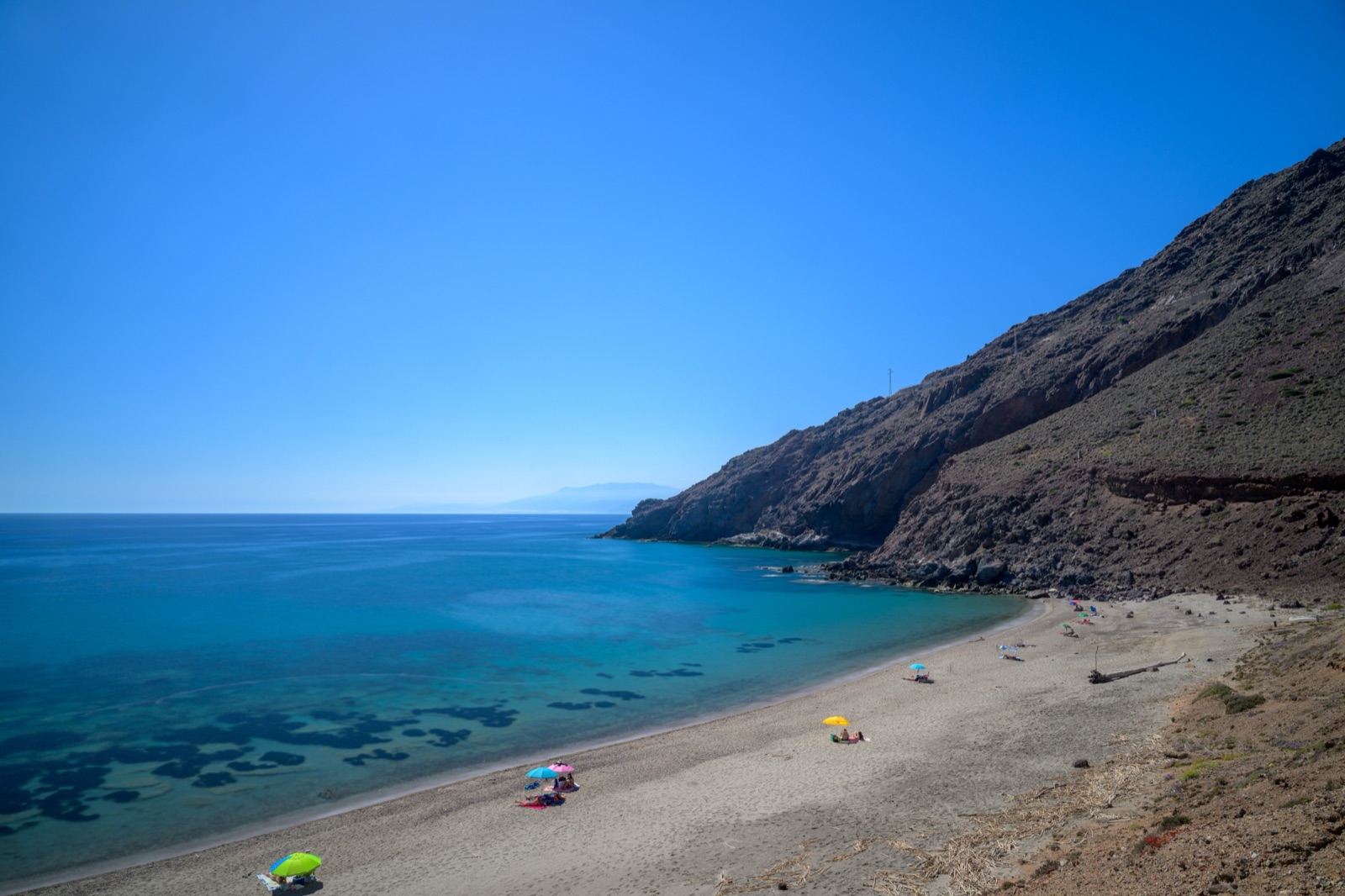
The best time to visit Cabo de Gata for most people is late May to June or September to early October: the sea is warm enough to swim, the days are long and sunny, and you avoid the peak weeks of July and August, when the beaches west of San José are regulated and the population of the area swells to about 60,000. Spring (March to May) and autumn are the best seasons for walking, and winter is mild, quiet and still mostly dry. This guide goes through the climate month by month, the summer rules that change how you reach the beaches, the crowds, the wildlife calendar and what is open when.
The climate in brief
Cabo de Gata is the driest place in the Iberian Peninsula, with 150 to 170 mm of rain a year and a record low of 52 mm in 1981. It is the only region in Europe with a hot desert climate, and ten months of every year are considered arid. Long-term records at the Cabo de Gata lighthouse put the annual average temperature at about 19.8 °C.
The nearest station with long-term climate normals from AEMET, Spain’s state weather agency, is Almería Airport (1981–2010, at a station 21 m above sea level), on the edge of the bay of Almería just west of the park. Over the year it records a mean of 19.1 °C, 200 mm of rain on 25.4 days and 2,994 hours of sunshine. Rain falls mainly in autumn and winter, decreases in spring and is very rare in summer.
Month by month
| Month | Average high | Average low | Rain | Rain days (1 mm or more) | Sunshine |
|---|---|---|---|---|---|
| January | 16.9 °C | 8.3 °C | 24 mm | 2.9 | 194 h |
| February | 17.6 °C | 9.0 °C | 25 mm | 2.9 | 191 h |
| March | 19.6 °C | 10.6 °C | 16 mm | 2.6 | 232 h |
| April | 21.4 °C | 12.5 °C | 17 mm | 2.6 | 261 h |
| May | 24.1 °C | 15.3 °C | 12 mm | 1.9 | 297 h |
| June | 27.9 °C | 18.9 °C | 5 mm | 0.6 | 325 h |
| July | 30.5 °C | 21.7 °C | 1 mm | 0.3 | 342 h |
| August | 31.0 °C | 22.4 °C | 1 mm | 0.3 | 315 h |
| September | 28.4 °C | 20.0 °C | 14 mm | 1.5 | 256 h |
| October | 24.5 °C | 16.3 °C | 27 mm | 2.8 | 218 h |
| November | 20.5 °C | 12.3 °C | 28 mm | 3.6 | 183 h |
| December | 17.9 °C | 9.6 °C | 30 mm | 3.3 | 178 h |
Source: AEMET climate normals for Almería Airport, 1981–2010. For the forecast for the days of your trip, see the site’s weather page.
Two things the averages hide. First, rain comes in bursts: single-day downpours can exceed 200 mm, more than the average for a whole year, usually in autumn. Second, the nights stay warm for much of the year: Cabo de Gata has on average 119 tropical nights a year, so in high summer it barely cools down after dark.
Season by season
Winter: December to February
Winter is mild and bright. Average highs at Almería Airport are 17.9 °C in December, 16.9 °C in January and 17.6 °C in February, with around 3 rain days a month and still close to 200 hours of sunshine. It is too cool for most people to swim, but it is a fine time to walk the longer coastal trails, to see the salt flats and their birds, and to have the villages almost to yourself.
With no thermal winter, many bird species stay at the salt flats through the cold months, and a few hundred flamingos stay all year. Some campsites close: Camping Tau in San José is open from Easter until 1 October, while Camping Sopalmo, just outside the park near Mojácar, is open all year, and it is especially popular with British visitors, many of whom make Mojácar their winter home.
Spring: March to May
Spring is the best season for walking. Highs rise from 19.6 °C in March to 24.1 °C in May, the rain tails off, and sunshine climbs to 297 hours in May. The hills are at their greenest after the winter rain, and in spring the albaida shrub flowers along trails such as the Caldera de Majada Redonda; beekeepers value it for its mild honey. Migrating birds pass through the salt flats: more than 100 bird species have been recorded there, about 70% of them migrants resting on passage.
Easter brings the first busy weekends and the reopening of seasonal campsites. By late May the sea is swimmable for many people, and beach access is still free and unregulated.
Early summer: June
June is perhaps the single best month for a beach holiday. The average high is 27.9 °C, there is almost no rain (0.6 rain days) and 325 hours of sunshine. The beach regulation starts in the second half of the month (in 2026 on 20 June), but the peak crowds and the extra closures of July and August have not yet arrived. Mojácar’s Moors and Christians festival is held every year in June.
High summer: July and August
July and August are hot, dry and busy. Average highs are 30.5 °C in July and 31.0 °C in August, with 342 hours of sunshine in July, the most of the year. The population peaks in summer at about 60,000 and is much lower the rest of the year.
This is when the rules described below apply in full, when car parks fill early, and when walking is only sensible at first light. It is also flamingo season: in late July and early August the flamingo colony can number thousands.
September
September keeps the summer’s warmth (average high 28.4 °C) with fewer people, and the sea is at its warmest after a long summer. The beach regulation continues until late in the month (in 2026 until 27 September), but the busiest weeks are over. It is the best month for snorkelling and kayaking for most visitors.
Autumn: October and November
October is a superb month: an average high of 24.5 °C, 218 hours of sunshine and free access to every beach. November is cooler (20.5 °C) and the wettest part of the year starts, with 28 mm on 3.6 rain days. Both months are good for walking.
The summer access rules
The way you reach the most famous beaches changes in summer.
- In 2026, motor access to the beaches west of San José (Genoveses, Barronal, Mónsul, Media Luna and Cala Carbón) was regulated from 20 June to 27 September.
- Vehicles pay a single €6 fee, and the barrier closes at set hours or early when the car parks are full.
- Walking or cycling to the beaches is free, and a shuttle bus from San José drops you at the beach access points.
- A height barrier keeps caravans and motorhomes out at night, from 20:00 to 08:00.
- Outside the summer regulation, access is free, but you must always park in the designated car parks.
Further north, Los Muertos beach is always reached on foot by a path; only the nearby car park is regulated. In summer the Los Muertos car park charges €6 for cars, €3 for mopeds, €4 for motorbikes and €10 for vans, motorhomes and buses, from 09:00 to 21:00, and from early July a shuttle bus runs from Carboneras town to Los Muertos.
The dates are set each year, so check them before you travel. The guide to getting to Cabo de Gata explains the shuttle, the buses from Almería and the alternatives in detail.
Over the same summer period, kayaks, canoes and similar unpowered craft may not gather in groups of more than 5 along the park’s coast. This mainly affects organised outings, which is why kayak tours here run in small groups.
Crowds: how to avoid them
- Go early. In July and August arrive at the beaches before mid-morning, or after the late afternoon.
- Go in June or September instead of July or August if you can.
- Use the shuttle or walk to Genoveses and Mónsul in summer rather than queuing at the barrier.
- Choose the north-east in high summer: Agua Amarga, Las Negras and the coves reached by boat are quieter than the beaches west of San José.
- See the coast from the sea: boat trips and kayak outings reach coves you cannot drive to. The boat trips and kayaking guide compares them.
Wind and sea
Wind matters as much as temperature on this coast. The two winds locals talk about are the levante from the east and the poniente from the west, and the sheltered side of the park changes with them.
- Los Muertos shelves steeply, so you are soon out of your depth, and swimming is dangerous in a strong levante (east) wind.
- At Genoveses, the gentle, gradual entry into the water suits families, but strong winds can create dangerous rip currents.
- Camping La Caleta at Las Negras has its own access to the quiet Cala del Cuervo, sheltered from the westerly poniente winds, and Playa del Peñón Blanco at La Isleta is also well sheltered from the poniente.
Boat and kayak trips depend on the sea state, so keep a spare day in your plan.
The wildlife calendar
- Flamingos are present at the salt flats all year round, with a few hundred staying all year.
- In late July and early August the flamingo colony can number thousands.
- Spring and autumn bring the migrants: about 70% of the bird species recorded at the salt flats rest there on passage.
- Winter keeps many species that would leave colder places, as there is no thermal winter here.
- Spring brings the flowers of the albaida and other shrubs to the volcanic hills.
- Under the water, the marine reserve is rich all year; the richest marine life is at 5 to 10 metres.
The volcanoes, flamingos and snorkelling guide explains where to watch the birds and how to snorkel in the reserve.
Best months by activity
| Activity | Best months | Why |
|---|---|---|
| Beaches and swimming | June, September | Warm sea and sun without the peak crowds |
| Snorkelling and kayaking | June to September | Warmest water; calm mornings |
| Hiking | March to May, October to November | Highs of about 19.6 °C to 24.5 °C |
| Birdwatching | All year; late July to early August for flamingo numbers | Thousands of flamingos in high summer |
| Quiet villages | November to February | Fewest visitors, mild days |
| Photography | Winter and spring | Clear air, green hills after rain |
What is open when
- Campsites: Camping Tau in San José is open from Easter until 1 October; Camping Sopalmo is open all year.
- Beach shuttles: run only in the regulated summer period.
- Lifeguards: at Mojácar, just outside the park, the full lifeguard service runs from 1 July to 31 August, from 11:00 to 19:00, and to 20:00 at weekends. The wild beaches inside the park have no services at all.
- Dogs: during the bathing season, from 1 June to 30 September, domestic animals may not enter bathing waters and bathing areas.
- Boat trips: dates depend on the operator and the sea; check the tours page for live dates and prices.
Getting around in each season
The season also changes how easy it is to get about without a car.
- All year, Autocares Bernardo buses run from Almería’s intermodal station to San José; the fare is €3.10 (€2.06 with the CMT transport card). Buses leave Almería for San José at 10:00, 13:15 and 18:30 Monday to Saturday, and at 10:00 and 18:30 on Sundays and holidays.
- In the regulated summer period, a shuttle bus from San José drops you at the beach access points for Genoveses and Mónsul, and from early July a shuttle bus runs from Carboneras town to Los Muertos.
- Outside summer, there is no shuttle, but you can drive to the beach car parks freely; Mónsul is reached by a 4-kilometre forest track from San José, and Genoveses is no more than a kilometre from San José, an easy walk even with a pushchair.
If you are coming by bus out of season, base yourself in San José, which has the most services and the beaches within walking distance.
Light, views and photography
The low winter sun and the clear air after rain make the cooler months the best for photographs of the volcanic coast. Several viewpoints face east over the sea and are recommended for sunrise, among them the Mirador de las Sirenas by the lighthouse and the Mirador Josefina Huertas above San José; the Vela Blanca viewpoint, on a saddle with views both west and east, works at sunrise and sunset. In summer, go at first light, before the heat haze and the crowds. The viewpoints guide lists them all, with how to reach each one.
A note on heat
From June to September, treat the sun seriously. There is little shade on the beaches and none on most trails, the rocks reflect the heat, and there is nowhere to buy drinks at Mónsul. Carry water, a hat and sun cream, and plan walks for the early morning. The hiking guide lists the short trails that still work in summer.
Frequently asked questions
What is the best month to visit Cabo de Gata?
June or September for beaches, with average highs of 27.9 °C and 28.4 °C at Almería Airport; April, May or October for walking.
Is Cabo de Gata worth visiting in winter?
Yes, if you want walking, birds and quiet villages rather than swimming. January averages a high of 16.9 °C with around 194 hours of sunshine.
When are the beach restrictions?
In 2026 the summer regulation of motor access to Genoveses, Mónsul and the neighbouring coves ran from 20 June to 27 September. Outside it, access is free, but you must park in the designated car parks.
When can I see flamingos?
All year, but in late July and early August the colony can number thousands.
Does it rain in Cabo de Gata?
Rarely: Almería Airport records 200 mm a year on 25.4 days, mostly from October to February, and almost none in July and August.